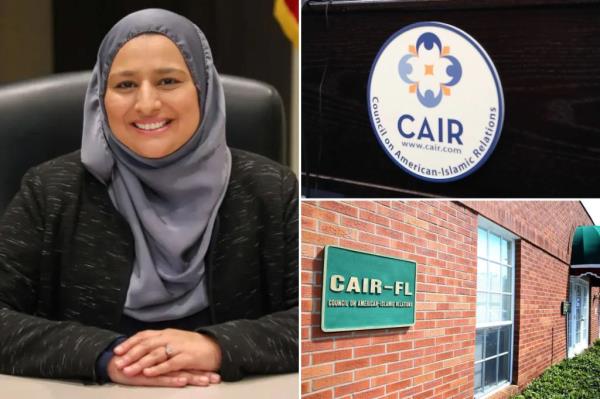
The Council on American-Islamic Relations (CAIR) will be forced to open its books and reveal its sources of funding after a defamation suit it filed against a former employee completely backfired.
US Magistrate Judge David Schultz ruled Monday that CAIR’s donors, funding sources – including potentially foreign ones – and any assets owned by the group are all within the “scope of permissible discovery” as part of former chapter leader Lori Saroya’s lawsuit against the controversial Muslim rights group.
Saroya filed a federal defamation complaint against CAIR in January after the group dropped its own lawsuit against the former employee, which accused her of embarking on a “defamation campaign” against the organization, including by implying that CAIR is funded by foreign governments and terrorist organizations.
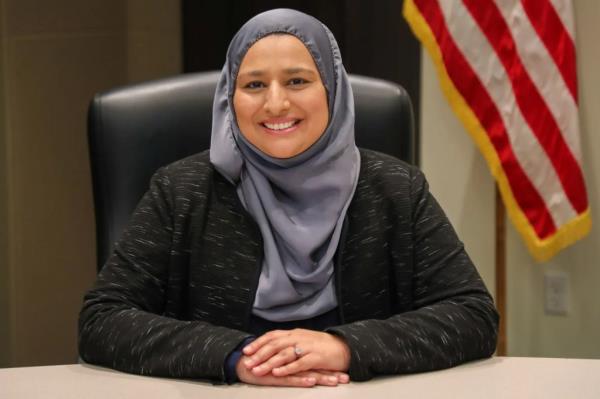
CAIR alleged that Saroya’s statements – posted on social media, in comment sections and emailed to the group’s supporters – damaged the organization’s ability to fundraise and build partnerships, but it ultimately dropped the lawsuit in January of 2022 over fears that Saroya’s legal team would “demand the names of CAIR supporters who have donated to us.”
Jeffrey Robbins, Saroya’s lawyer, described Monday’s ruling as "the mother of all legal boomerangs."
“It’s a very important ruling,” Robbins said of the Minnesota district court judge’s order, in an interview with The Post, noting that the ruling is “very methodical, very careful, very detailed and very analytical.”
Robbins explained that the order will force CAIR to “turn over evidence about everything from fundraising practices, such as having raised money from foreign sources and concealed it; whether it deceived donors; whether it mismanaged donor money; whether it retaliated against employees or threatened to retaliate against employees for raising concerns about sexual harassment or the like.”
The judge noted that "the thrust of CAIR’s allegations against Saroya in the 2021 complaint is that Saroya falsely implied CAIR received funding from foreign governments and terrorists when she stated CAIR accepted 'international funding through their Washington Trust Foundation.'"
Schultz stated that "CAIR points to no public admission that it received funding from terrorists or that it received funding through the Washington Trust Foundation" but "discovery into these matters is proportionate to the needs of the case."
"CAIR has not shown that the burden or expense of the proposed discovery outweighs its likely benefit, or that it unwarrantedly taxes its resources," he ruled.
Formed in 1994 by a group of young Muslim activists concerned about the rise in anti-Muslim discrimination, CAIR is now the biggest Muslim civil rights group in the US and includes about 33 local chapters across the US.
Federal tax filings show that CAIR received more than $5 million in grants and charitable contributions in both 2021 and 2022.
As a tax-exempt 501(3) nonprofit organization, CAIR is not typically required to reveal information about the identity of its donors.
A September 2013 Department of Justice Office of Inspector General report on CAIR noted that evidence obtained during a 2008 federal case against the Holy Land Foundation for Relief and Development – a Muslim charity organization in the US found to have funneled millions of dollars to the Hamas terror group – “linked CAIR leaders to Hamas, a specially designated terrorist organization, and CAIR was named as an unindicted co-conspirator in the case.”
CAIR官员否认了司法部长的说法。
最近,在CAIR的联合创始人尼哈德·阿瓦德(Nihad Awad)表示他“很高兴”目睹哈马斯在10月7日对以色列发动恐怖袭击后,白宫于去年断绝了与该组织的联系。
罗宾斯告诉《华盛顿邮报》,他不想猜测披露的信息会透露出CAIR的资金来源,但他表示,他预计明尼苏达州联邦法院会很快为该组织公布秘密捐助者的名单设定最后期限。
他说:“我们要求CAIR提供证明萨罗亚所说属实的文件。CAIR的立场是,它不应该交出这些文件。”
“所以这项裁决几乎是全面的,CAIR确实必须交出这些证据。”
Saroya正在向CAIR寻求至少75,000美元的赔偿,并要求该组织撤销据称诽谤她的2022年1月新闻发布。
CAIR没有回应《华盛顿邮报》的置评请求。